Why did physical representations of the Buddha only start to appear a few centuries after his death?
6
votes
4
answers
4208
views
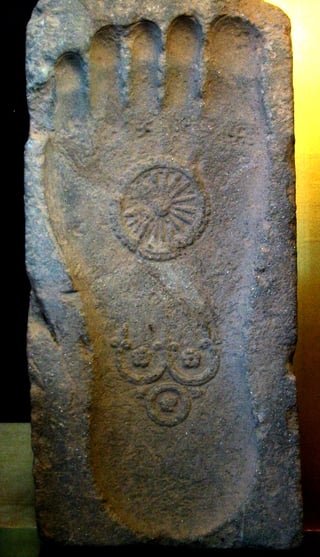
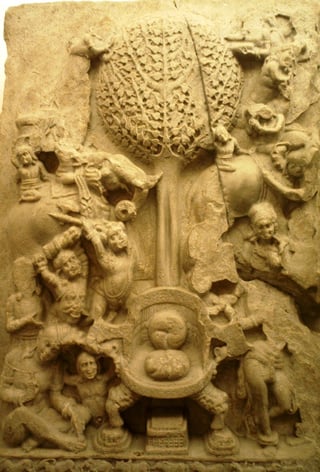
Prior to around the 1st century CE, Buddhist art tended not to depict the Buddha himself, instead preferring to depict relics/symbols of the Buddha, such as his footprints, or the Bodhi tree. That period (the so-called "aniconic" period) yielded works like these:
 However, after around the 1st century CE, we have depictions of the Buddha in human form from all over the Buddhosphere (so to speak).
What changed around the 1st century CE that led to creators of Buddhist art starting to depict the Buddha in human form? Was this change accompanied by a related change in doctrine or belief, e.g. declaring that it was now permissible to depict the Buddha as a human?
(This question is sect-agnostic, as far as I know, since I am not aware of any sect-specific differences in the way art was produced c. the 1st century CE.)
However, after around the 1st century CE, we have depictions of the Buddha in human form from all over the Buddhosphere (so to speak).
What changed around the 1st century CE that led to creators of Buddhist art starting to depict the Buddha in human form? Was this change accompanied by a related change in doctrine or belief, e.g. declaring that it was now permissible to depict the Buddha as a human?
(This question is sect-agnostic, as far as I know, since I am not aware of any sect-specific differences in the way art was produced c. the 1st century CE.)
However, after around the 1st century CE, we have depictions of the Buddha in human form from all over the Buddhosphere (so to speak).
What changed around the 1st century CE that led to creators of Buddhist art starting to depict the Buddha in human form? Was this change accompanied by a related change in doctrine or belief, e.g. declaring that it was now permissible to depict the Buddha as a human?
(This question is sect-agnostic, as far as I know, since I am not aware of any sect-specific differences in the way art was produced c. the 1st century CE.)
Asked by senshin
(814 rep)
Jun 19, 2014, 10:52 PM
Last activity: Apr 18, 2015, 08:18 AM
Last activity: Apr 18, 2015, 08:18 AM